

Commis Chef Course in Kerala: Certificate, Curriculum & Career

You are kindly requested to fill out this form and select the course at IIIC that interests you so that we may get in touch with you as soon as admissions are open.
Anyone searching for a commis chef course kerala option quickly discovers most results are short weekend workshops with no real placement pathway. IIIC’s Certificate Program in Food Production is different. It is a structured, credential backed route into a professional kitchen, built specifically around the commis level entry role that most working chefs start their careers in.
It is a 6 month, Supervisory level certificate open to any candidate who has completed Plus Two and is at least 18 years old, no prior cooking experience required. This guide walks through the curriculum, the built in internship, the fees, and where graduates typically end up working, so you know exactly what you are signing up for before you apply.
Key Takeaways
- The Commis Chef course is a 6 month, Plus Two entry certificate open to candidates aged 18 and above, no prior kitchen experience needed.
- Training is quality assured through a Tata Strive partnership and includes a 2 month structured internship at a luxury hotel, built into the program rather than optional.
- Course fee is Rs 53,000, and graduates are prepared for entry roles in fine dining, hotels, cruise lines, and banquet operations.
Who Is the Commis Chef Course For
The course is designed as an entry point into a professional kitchen career, not a hobbyist cooking class for weekend enthusiasts. Eligibility is deliberately simple: candidates need a Plus Two qualification and must be at least 18 years old, which makes the program accessible to school leavers who already know they want to work in food production and would rather start earning a wage in a kitchen than spend three or four years in a general degree program first.
It is classified at the Supervisory level within IIIC’s program structure, which matters practically. The training is built around real kitchen roles, station discipline, and reporting lines from day one, rather than general home cooking skills you might pick up from a video channel. Candidates who are switching careers into hospitality, or who already have some informal kitchen experience and want a recognized certificate to back it up, also enroll regularly.
Plenty of aspiring cooks in Kerala instead learn on the job, starting as unpaid or low paid kitchen helpers and picking up skills informally over a year or two. That route can work, but it leaves gaps: hygiene protocols get learned inconsistently, plating technique depends entirely on whichever senior cook happens to be training you that week, and there is no certificate at the end to show a future employer. A structured commis chef course kerala program compresses that same learning curve into 6 focused months, with every core skill area covered deliberately and a recognized certificate plus an internship reference to show for it at the end.
What the 6 Month Curriculum Covers
The program is organized around six practical areas that map directly onto what a working commis chef needs on day one of a real job: culinary fundamentals, food safety and hygiene protocols, cooking methods, menu development and recipe execution, plating and presentation techniques, and sustainable practices with waste reduction.
Training is hands on and led by experienced chefs, so students spend most of their time in kitchen operations rather than sitting through lectures. This mirrors how professional kitchens actually train new commis chefs, through repetition, supervision, and correction at the station, not through theory exams. Food safety and hygiene protocols in particular are treated as non negotiable, since this is the area that gets a kitchen shut down by inspectors if it is done poorly, and employers specifically look for candidates who have this drilled in before hiring.
You can review the full program breakdown, including current fees and intake information, on the Certificate Program in Food Production (Commis Chef) page directly.
The 2 Month Luxury Hotel Internship
A defining feature of this program is its 2 month structured internship at a luxury hotel, built into the course structure rather than offered as an optional extra you have to arrange yourself. This gives students genuine kitchen floor experience before they graduate, working shoulder to shoulder with professional brigades under real service pressure, which is very different from a training kitchen with no live orders.
The training quality is backed by a partnership with Tata Strive, which adds a layer of external quality assurance to how the program is run and assessed. In a traditional hotel kitchen, a trainee typically starts as a commis and works up through stations over time, similar to the kitchen brigade hierarchy used in professional food service worldwide. The internship period is designed to mirror that real progression, so graduates leave with a working understanding of how a live kitchen is actually organized, not just a certificate saying they attended classes.
Fees and What You Get for the Investment
The course fee is Rs 53,000 for the full 6 month program, which includes structured training, internship placement support, and access to IIIC’s residential campus and hostel facilities for students who are relocating to Kollam to attend, since the campus is designed to house students from across Kerala, not just the local area.
Given that the internship is built into the program rather than something a graduate has to source and negotiate on their own after finishing, the fee covers a meaningfully different, more supported offering than a short private cooking workshop that simply hands you a completion certificate at the end. Students should budget separately for hostel and living costs if relocating, since the course fee itself covers training and internship support rather than boarding.
Career Outcomes After the Commis Chef Course
Graduates are prepared for entry level roles in fine dining restaurants, hotel kitchens, cruise line food service, and banquet operations. IIIC publishes a broader, institute wide placement record with named recruiting partners across its programs, which reflects the kind of employer relationships that generally support graduate placement at the institute.
For a commis chef specifically, the internship period is often where the first real job offer comes from, since hotels frequently absorb strong performing interns directly into their permanent kitchen staff rather than restarting a hiring search from scratch. Building good habits and showing up reliably during those 2 months tends to matter as much as raw cooking talent when a hotel decides who to keep on. Career progression from there typically follows the standard kitchen ladder, moving from commis toward more senior station roles as experience builds.
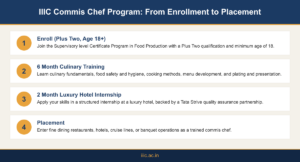
[Alt: Infographic showing the IIIC commis chef course path from enrollment through 6 month training and 2 month internship to placement] | The commis chef journey at IIIC, from enrollment through internship to placement
Accreditation and How to Apply
The program sits within IIIC’s broader training structure as an NSDC and CSDCI affiliated institute, details of which are on the accreditation and affiliation page. This matters to employers who want some external signal that a candidate’s training followed a recognized structure, rather than an informal course with no outside oversight.
Applications go through IIIC’s standard admissions process. Since intake cycles and exact application dates change from year to year, the most reliable next step is to check the live admissions page or contact the admissions team directly for the current application window rather than relying on any single date mentioned elsewhere online. Seats for supervisory level programs are limited, so candidates who know they want this specific course are generally better off applying as soon as a window opens rather than waiting until close to the deadline.
Conclusion
IIIC’s commis chef course kerala option stands out because it is built around a genuinely complete path rather than a single workshop: eligibility that meets school leavers where they are, a 6 month curriculum covering the full range of kitchen skills employers actually check for, and a 2 month luxury hotel internship that turns classroom training into real, service tested experience. If you are ready to start a professional cooking career, get in touch with IIIC’s admissions team to check current intake dates and next steps.
Frequently Asked Questions
- What is the duration of the commis chef course at IIIC?
The Certificate Program in Food Production (Commis Chef) at IIIC runs for 6 months, combining hands on kitchen training with a structured internship component at a luxury hotel partner.
- What are the eligibility requirements for this course?
Candidates need to have completed Plus Two (higher secondary) and be at least 18 years old. No prior culinary experience is required to enroll.
- How much does the commis chef course cost?
The course fee is Rs 53,000 for the full 6 month program, which includes training and the built in internship placement support.
- Does the course include an internship?
Yes. A 2 month structured internship at a luxury hotel is included, giving students real kitchen experience before they graduate, backed by a Tata Strive quality assurance partnership.
- What topics are covered in the curriculum?
The curriculum covers culinary fundamentals, food safety and hygiene, cooking methods, menu development and recipe execution, plating and presentation, and sustainable kitchen practices.
- What jobs can I get after completing a commis chef course?
Graduates typically enter fine dining restaurants, hotel kitchens, cruise line food service, or banquet operations as entry level commis chefs.
- Is this course only for students who live near Kollam?
No. IIIC has a residential campus with hostel facilities, so students from anywhere in Kerala or beyond can relocate to attend the program in Kollam.
- Is a food production certificate the same as a culinary certificate?
They overlap significantly. IIIC’s food production certificate focuses specifically on the commis chef entry role, covering the same core cooking, hygiene, and presentation skills found in broader culinary certificate programs.
- Who accredits or backs the quality of this training?
The program has a quality assurance partnership with Tata Strive, and sits within IIIC’s broader NSDC and CSDCI affiliated training structure. See the accreditation and affiliation page for details.
- How do I apply to the commis chef course at IIIC?
Applications go through IIIC’s admissions process. Since intake windows change each cycle, check the admissions page or contact IIIC directly for current dates and next steps.